
Insights
AIAIAI What have we done?

When you phone my business line, Tony answers. Tony is an AI voice agent. He is polite, friendly, business like. The people currently taking my on-demand course “Conflict Management Skills for Volunteer Caregivers” are encouraged to interact with Amity, my AI training coach/facilitator. They watch a video, form some ideas, confront a question, and then are prompted to phone Amity for a debriefing conversation.
For some people, talking to an AI on the phone is a step too far. Yet who of us don’t already let computers decide which emails we never see, which road we take home, and whether our credit card purchase goes through. We have been living with artificial intelligence for a long time. So long in fact that we take it for granted. Hey, Siri, where’s the nearest coffee shop? Alexa, turn the lights down and play some gentle low key piano music. For some people that has become as normal as letting the dog out to pee before going to bed at night.
So when did it arrive, and why did we stop noticing?
Where it started
In 1950 the British mathematician Alan Turing published a paper asking whether machines could think. Rather than argue about definitions, he proposed a test: if a person conversing by text could not reliably tell a machine from a human, perhaps the question of “thinking” mattered less than we assumed.
A few years later, in 1955 John McCarthy and three colleagues wrote a funding proposal for a summer workshop at Dartmouth College, to be held in 1956, and called the subject “artificial intelligence”. They were optimistic. The proposal suggested that a carefully chosen group working together over one summer could make significant progress on getting machines to use language, form concepts and improve themselves.
In 1960 my father predicted to my school headmistress that the time will come when you will write down your symptoms on a piece of paper, feed it into a computer that will then give you a diagnosis. (Miss McGregor’s response was “Dr. Du Toit, you’re pulling my leg!”)
In 1966 Joseph Weizenbaum at MIT wrote ELIZA, a simple program that imitated a psychotherapist by turning a person’s statements back into questions. It understood nothing. Weizenbaum was disturbed to find that people confided in it anyway; his own secretary, who knew exactly how it worked, asked him to leave the room so she could talk to it privately. The tendency to read understanding into a machine is as old as the machines themselves.
Two years later, researchers at the Stanford Research Institute built Shakey, a wheeled robot that could plan its way across a room. To do so they developed a route-finding method called A* (“A-star”). Its descendants sit inside the navigation app on your phone.
How it moved in quietly
Through the 1980s and 1990s AI sneaked out of the laboratory and entered the workplace, quietly, mostly out of sight. Banks began using neural networks, software loosely modelled on the way brain cells connect, to spot unusual card transactions. If your bank has ever phoned to ask whether you really bought something in another city, you have met it. In the United States, machines were reading the handwritten amounts on a large share of cheques by the late 1990s, and postal systems were reading handwritten addresses.
Then it came into the home. Online shops started telling us that customers who bought one book also bought another. Email services learned to recognize spam. Phone menus began asking us to “say billing”. Cameras learned to find faces, photo libraries learned to group them, translation services improved dramatically, and streaming services learned what we might watch next. In 2011 Siri arrived on the iPhone, and voice assistants followed into kitchens and cars.
None of this felt like science fiction. It felt like convenience.
Why we stopped seeing it
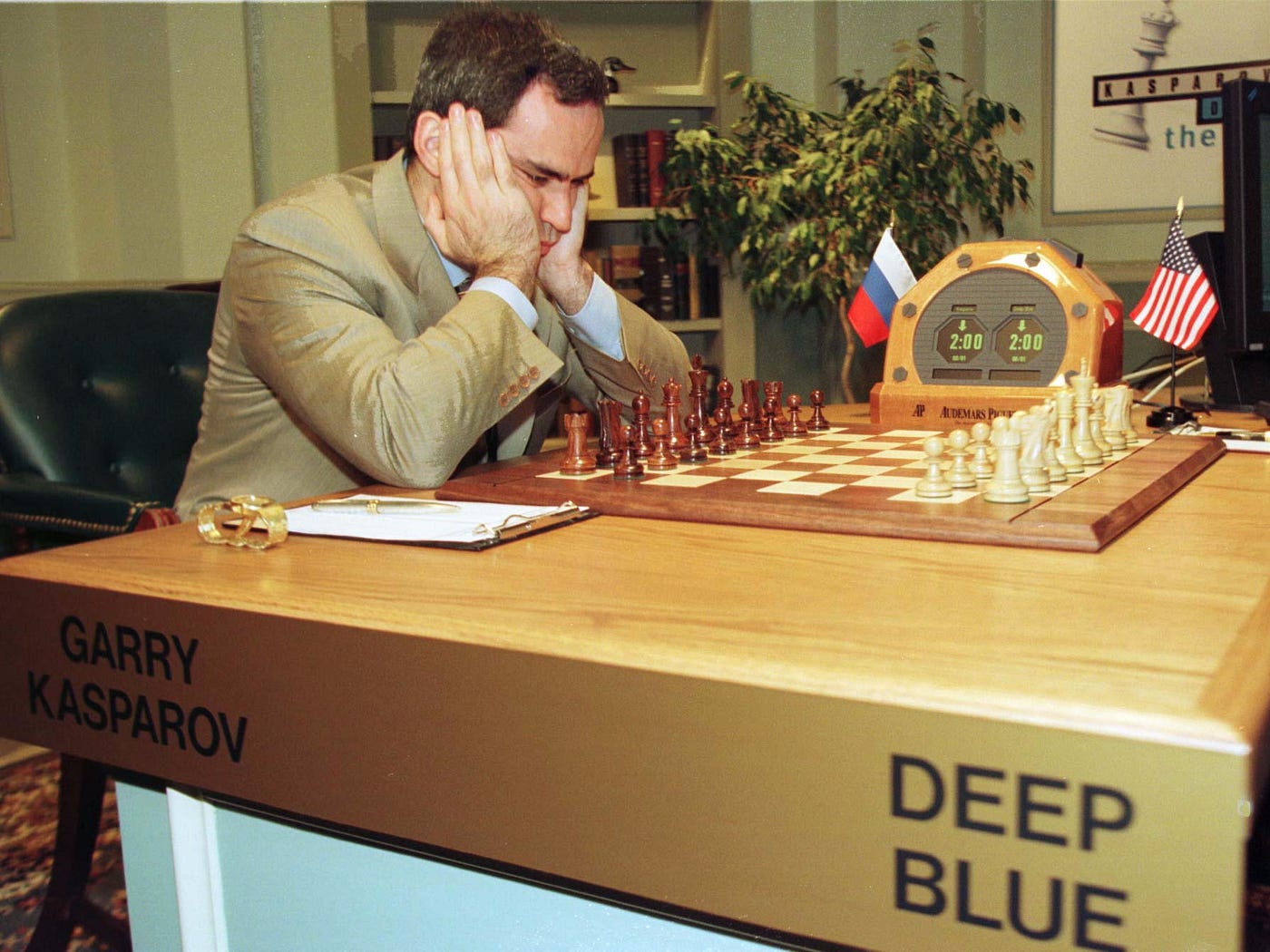
The writer Pamela McCorduck described the pattern in 1979, in her history Machines Who Think. Each time a computer masters something we believed required intelligence, we decide it was never real intelligence in the first place. Chess was the great test of the machine mind until IBM’s Deep Blue beat the world champion Garry Kasparov in 1997. Afterwards, chess was recast as mere calculation. Researchers call this the “AI effect”, and John McCarthy is often credited with the observation that once something works, nobody calls it AI anymore.
Looking at the AI we take for granted, it shares a few features. It is useful, it works in the background, and it leaves the final decision to us. The spam filter sets a message aside, and we can still open the folder. The navigation app proposes a route, and we still drive. The shop recommends a book, and we still choose whether to buy it. The system advises; the person acts. That arrangement is comfortable, and comfort is exactly what makes it invisible.
What agentic AI changes
When ChatGPT was released in November 2022, AI became visible again, largely because it could hold a conversation. People who had used AI every day for twenty years suddenly felt they were meeting it for the first time.
Agentic AI goes a step further. An agentic system is given a goal rather than a single instruction. It works out the steps, uses tools such as email, calendars, booking systems and databases, carries those steps out, checks how it is doing, and adjusts, with much less moment-by-moment direction from a person. The navigation app tells you that a road is closed, or even reroutes you to avoid a traffic jam caused by road works. An agent asked to get you to a two o’clock meeting in Sydney might rebook your travel, move your earlier appointment and let the other attendees know you are running late.
In small ways this is already ordinary. A voice agent that answers a business phone, gathers what the caller needs and books an appointment into a calendar is acting on someone’s behalf. The difference between this and the AI we stopped noticing is less about cleverness than about where the decision sits. For decades, AI suggested and people acted. With agentic AI, the system acts, and people review, sometimes afterwards.
That shift raises practical questions every organization will meet. What is an agent allowed to do without asking? Who is accountable when it gets something wrong? How does anyone find out what it did, and why? These are less technical questions than questions about trust, responsibility and the design of the system the agent works within.
The cloud is a building

Engineers had been drawing a little cloud on network diagrams since at least the 1970s. It marked the part of the network whose inner workings did not matter to the person reading the diagram. In 1996 George Favaloro, a marketing executive at Compaq, and Sean O’Sullivan, a young entrepreneur, were looking for a way to sell internet services to business, and the phrase “cloud computing” appears in their papers that autumn. Both men later agreed it was born as a marketing term. Google’s chief executive, Eric Schmidt, brought it to a wide audience at a conference in August 2006, the same month Amazon launched a rental computing service it called the Elastic Compute Cloud.
It was a clever choice of word, and a cynical one. A cloud is weightless and belongs to nobody. A data centre is a large windowless building behind a security fence, full of computers that need electricity day and night and water or air conditioning to keep them cool.
The early data centres were built where land and power were cheap and the internet cables already in place. In Ashburn, Virginia, outside Washington, AOL built a data centre in 1997 to serve its dial-up customers, and MAE-East, one of the internet’s first major traffic exchanges, moved there the following year. The area is now known as Data Center Alley and holds the greatest concentration of data centres on the planet. In 2006 Google opened its first company-owned data centre in The Dalles, Oregon, on the Columbia River, drawn by cheap hydroelectric power, river water for cooling and inexpensive land. It stands across the road from the site of a former aluminium plant that had come for the same cheap power a generation earlier. Microsoft and others soon turned Quincy, a farming town in Washington State, into another hub. Google’s own website shows steam rising from the cooling towers at The Dalles. That steam is the only actual cloud on the site.
According to the International Energy Agency, data centres used about 1.5 per cent of the world’s electricity in 2024, and the agency expects that to more than double by 2030, to slightly more than Japan uses today. AI is the main driver of that growth. The effects are felt locally, on particular power grids and water supplies, and communities are pushing back against new data centres.
Now some questions for the average computer and smartphone user. How many pictures do you take per year? How many do you have in storage in ‘the cloud’? Do you ever sort and delete, or do you just pay the few extra dollars to upgrade the storage capacity you rent?
An estimated 2.1 trillion photos were taken worldwide in 2025, about 5.3 billion a day, almost all of them on phones. Google says its Photos service alone holds more than nine trillion photos and videos. In one American survey the average person had more than 3,000 photos and videos on their phone, and more than half had not looked at their camera roll in the previous year. The blurred shots, the screenshots and the twelve near-identical pictures of the same sunset or dog gumming a rubber ball all sit in a data centre somewhere, powered, cooled and backed up. Ready for the viewer who never shows up.
Personal photo libraries are a small part of the load; most of the growth is coming from AI and the businesses using it. But the habit is the same one. Storage is out of sight, and cheap enough that deleting never seems worth the trouble. Would that not be a good place to start? Would a campaign against data centres not be more legitimate if you removed the beam from your own eye first?
My son Nik builds AI voice agents. I use them. We hold firmly that a human stays in the loop.
I certainly would not want an agent mediating a dispute without a human in the loop. Is that my own sense of job security I’m protecting, or is it something else. The latter. Some work depends on a human being present, and knowing which work that is may turn out to be the important skill.
Amity, my AI Voice agent supporting the people currently taking one of my courses, is still learning. She started this job barely a week ago. I receive the transcripts of all the conversations she has with the learners: I’m monitoring whether she’s doing her job correctly. Sometimes she oversteps; I pick it up, and I correct her, and when necessary engage directly with the learner. When the course is done all those files are deleted after Nik and I make sure that Amity knows not to make those mistakes again.
It may sound sinister if you’re of the school that holds the non-negotiable view that all AI is bad (despite your probable historic use of it, under other names, like Siri and Alexa, Google Maps). But, I’m an experienced learning facilitator. I’ve done it for decades. I learned about adult learning from my friend and colleague Flick Miller. The people who attend my on-demand training are encourage to look for linkages between their lived experience and theories offered in the course. How might these new tools be of value in a situation that went sideways that has always bothered you? Amity listens, responds, asks questions, gives feedback, as an in-person facilitator would. Amity’s on hand 24/7, whereas I’m available for only a third of a day at a time, and not on weekends. So she doesn’t replace me; she makes my services more accessible.
Amity is essentially an apprentice. She makes mistakes. This is her first gig. She’s learning from her mistakes with guidance from me, the human in the loop.
I realise that many are frightened by the prospect of what AI is, and what it can do.
There is fear for privacy and misuse of personal data, voice and image cloning, and grave concern for the health of the planet. That’s nothing new.
Way back when, when the first automobiles ran off the assembly line, there was shock and horror. These things were smelly, ugly, dangerous. They frightened the horses. And as cars became a normal part of life, Oh MY did we not do serious harm to the planet?
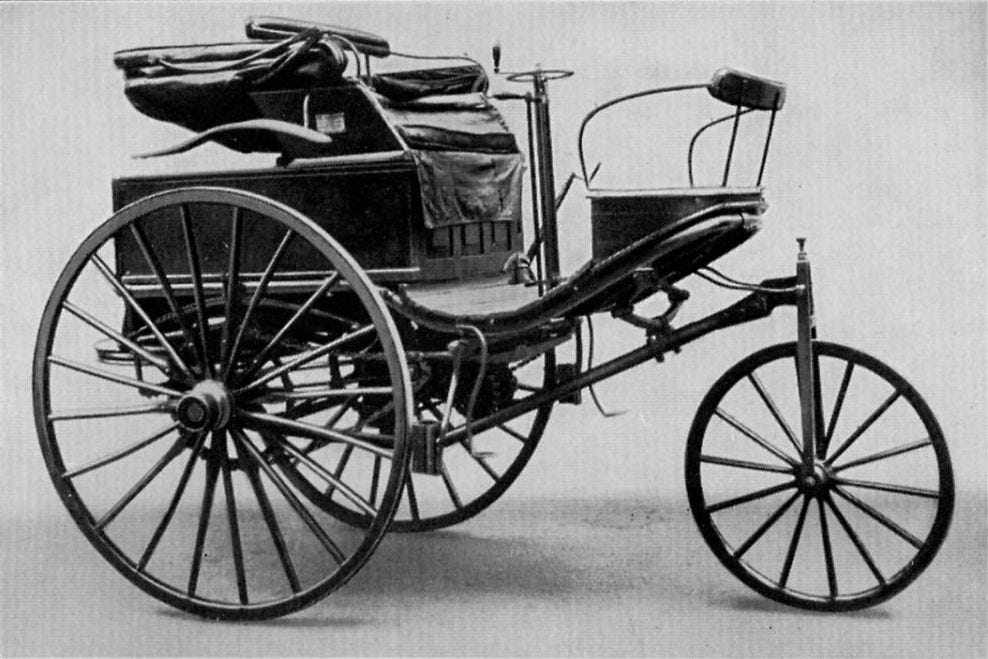
The destruction of hills, rivers, valleys, as we build more and more roads. As we came to understand the risks of cars coming face-to-face – the lives lost at intersections when cars didn’t and don’t stop, so we built fly-overs where there’s lots of traffic. We developed seat belts to stop you from flying through the windshield. And the head rests, to protect your neck from breaking when you brake suddenly and the idiot behind you rearends you because he didn’t respect the distance to be maintained between fast moving cars. Then we mandated seat belts and other safety measures. We required proof of ability and knowledge before licensing anyone. We punish people who drive without a licence. We require automobile owners to carry insurance to mitigate the harm that still happens daily.
Automobile manufactures learned how to install emission control mechanisms to reduce the pollution. In the process the platinum mines (platinum used for catalytic converters for emission control) in South Africa did what they could to extract the wealth from down below, while taking care of what’s on top. One of the things AmPlats did was to establish a nature reserve on the surface above the mining tunnels. I know. I ran leadership training in the guest lodge. I watched the zebras and kudu watching us from the shade of the thorn trees all around.

The point is, we learned how to manage our use of these dangerous automobiles, including their capacity to pollute the air we breathe. It is a continuous learning journey. And so it is with AI.
The fears are justified. But is the solution to stop AI? Stop data centres? Or are we going to learn from our mistakes and our successes? And then there’s the concern about data theft. Copyright, intellectual property being stolen by AI. In my next article I’ll expand on this point by discussing the GAIA hypothesis.
Fear of Job Loss
Back when desktop computers first came out, (late 1970s into mid-’80s) I was a trade union agent at Dalhousie University in Halifax, Nova Scotia. My job was to hold management to the terms and conditions of the collective agreement with the union, and to act in the best interests of the union members who all contributed to my salary. Secretaries were in the bargaining unit. Mostly they were still using IBM Selectric typewriters, but more and more faculty members who had access to grant funding, started acquiring desk top computers. They used them for research but it was a simple easy step to then shift into keying in your own memos, reports, letters. I had angry meetings with management, attempting to prohibit faculty members from doing their admin work on computer - that was protected union work Those communique’s had to be hand-written or dictated, and given to a secretary to type. I was protecting jobs. Fighting against technology.
I don’t recall any secretaries being laid off because of computers entering the premises, but I did monitor the job postings and there were fewer secretarial job postings as time went by. Computers did result in fewer secretarial jobs. But then what happened: Computers, along with training, landed on the desks of those still there. Their jobs changed because of the computers. Some tasks became way easier, some fell away completely, and new ones cropped up. Tech change leads to job change; not always job loss. And new jobs were created in the newly established Computing and Information Services (UCIS).
Acting out of fear, anger, groupthink or profound understanding?
Who is protesting where?
I asked Claude.ai. This is what came back:
No one counts protests worldwide, but the best figures are for the United States. Data Center Watch, a research group that tracks opposition, estimates there are 843 opposition groups across every state except Hawaii. That is its most recent report, covering April to June 2026. tomshardware
Data centres that were stopped
Community pressure works, but mostly before anything is built. Data Center Watch, which tracks local opposition in the United States, estimates that residents’ groups, moratoriums and lawsuits blocked or delayed data centre projects worth about $152 billion in 2025.
Microsoft walked away from a site in Caledonia, Wisconsin, saying it had listened to community feedback.
In Chile, Google withdrew plans for a data centre in Santiago after a court ruled that it had not properly considered the effect on the city’s drought-stressed water supply, and it is now redesigning the project with air cooling.
Shutting down a facility that is already running is much rarer.
In Limestone, Tennessee, neighbours endured the roar of a bitcoin mine’s fans for five years before a settlement with the county forced it to close in March 2026. The company had 120 days to remove its equipment.
I could find no example anywhere of the land being restored after a closure like that. It seems no one plans for what happens when the servers go dark.
Be smart, be proactive: consult beforehand
Most of these fights follow the same pattern. A project arrives under a code name, residents find out late, and by the time anyone is talking, everyone has a position to defend. It doesn’t have to go that way. Start the conversation before a site is chosen, with a convenor who answers to the process rather than to the company, funded jointly so no one can say the facilitator was bought. Tell people who the end user is and what the facility will need in power, water and land. Agree together on who will study the water supply, the electricity bills and the noise, and agree to accept what they find, so the meeting does not turn into duelling experts.
Build in an honest point at which the community can say no and the developer walks away. That exit is what makes people willing to stay at the table.
If the answer is yes, write it down in an agreement that can be enforced, covering protection from rate increases, limits on water use, noise monitoring/abatement, use of the waste heat where possible, and a fund set aside for closing the site and restoring it. Add regular review dates and a standing process for disagreements, so later problems have somewhere to go.
And perhaps learning from elsewhere: There was a time when South Africa accounted for 55% of the world’s gold production. And there were diamonds, platinum, etc. More than 6,100 South African mines had been exhausted and then abandoned before the law caught up with them. Since 2002, though, no company can get mining rights without first setting aside money to restore the land. Its responsibility ends only when the state issues a closure certificate, after the community has been consulted, and some liability for pollution continues even then. I imagine the AmPlats game reserve I mentioned earlier was anchored in this era.
Then, there was Richards Bay Minerals -mining coastal dunes in KwaZulu-Natal since the 1970s, and replanting natural habitat as it goes. Researchers have found that its oldest rehabilitated sites are growing back towards natural dune forest. Nova Scotia could apply the same principle to data centres: no permit until the money for closing the site and restoring the land is set aside in a fund the company cannot touch, and no walking away until the community agrees the work is done. A data centre has a working life of perhaps twenty years. The question of who restores the land afterwards should be settled before construction starts, not after the servers go dark. Imagine your grandchildren going on a Nova Scotian safari to the Acadian forest outside Point Tupper, to see moose, white tailed deer, coyotes, bobcats, bald eagles, ospreys, beavers, black bears, all funded by Anthropic.
If you missed that chance: when the conflict is already escalating
If the shouting has already started, begin by listening to each group separately: residents, the company, council, the utility and the regulators. One dispute is usually several tangled together. There are arguments about facts, competing interests, damaged relationships, deeply held values and anger about how the decision was made, and each needs a different response. Then lower the temperature with a time-limited standstill, where the developer pauses its applications and opponents pause legal action, without either side giving anything up. If secrecy or broken promises caused the escalation, that harm has to be acknowledged before any negotiation can be trusted. After that, each group chooses its own representatives for mediated talks, with private sessions where needed and the facts studied jointly. Every option stays open, including not building at all. Some people will oppose AI on principle, and no agreement will change that. What they can be offered is a fair process and a respectful hearing. One caution: if the decision has already been made somewhere else, any consultation is a performance, and it is better not to start one.
Sources: Data Center Watch · CNBC on Caledonia · Heise on Chile · The Energy Mag on Limestone
Closer to home
Let’s go back to Nova Scotia and Point Tupper, home of the future wildlife reserve (in my dreams). EverWind has proposed a $10-billion AI data centre at Point Tupper, to serve Anthropic, the company that makes Claude. Its cooling water would come from Landrie Lake, which is also Port Hawkesbury’s drinking water.
AI data centres are not (yet) on the list of projects that automatically trigger an environmental assessment in this province.
On 7 November 2026 people rallied in seven communities, from Sydney to Bridgewater, and nearly a thousand marched in Halifax in the rain, calling for a moratorium. One young man in Port Hawkesbury held a sign that said “You can’t drink data.”
I use Claude every day. My honest first reaction to the protests was irritation: I recognise many of the names of the leaders of the protest. I’ve participated in protests with them before; some I know personally. But how can I support a protest that threatens a tool I rely on? It took me quite some time to see what I was feeling. But now that I’ve exercised some empathy – something I always call for when I do conflict resolution – I step back from my judgement and irritation: We are all affected by actions we believed would not be taken.
My concern about something I value being threatened was similar to how the people of Port Hawkesbury feel about their water: something I depend on might be taken away, and I had no say in it (thanks to that young man in the protest in Halifax with his “you can’t drink data”. Clean reliable drinking water is essential. My AI app not so much. It is convenient. Fun even, but not life-critical.
I’m human, not always rational and sometimes emotional, and so are they, the protesters. Most of them are not trying to take AI away from me. They are objecting to a particular site, a particular lake, and a decision they feel was made without them, in a short space of time which suggests back-room deals or at the very least, double-speak.
A poll by Abacus found that only 16 per cent of Canadians would welcome an AI data centre in their community and 34 per cent would oppose one, while 39 per cent said it would depend on the details. That middle group is where the work should focus. I can continue to rely on my AI tool and start to more actively contribute to setting the standards for its future development and support.
Activism isn’t always negative. Pro-activism is where we make systemic changes that lead to a better future.
I am deeply disappointed in the people who govern this province. On 18 June this year, Premier Houston said a discussion about data centres that it would happen “far out into the future.” Not three months later, in late September he was saying that changing federal conditions had made proposals worth considering. On 16 October he stood beside EverWind as it announced a project whose first phase was already covered by a 20-year lease. It took four months to get from “far out into the future” to a signed deal. I know about structuring and negotiating agreements. It doesn’t happen overnight. Something as complex as a greenfields data centre would take more than 2 weeks to thrash out. And so my response to invites to participate in the protests was always ‘My issue is with the Premier, not with data centres’.
When I’m invited in to assist in resolving a conflict, I use my TIS model to find where the breakdown sits:
in Trust, Integrity, System.
The presenting conflict is the smoke alarm, not the fire. Here, the alarm is easy to hear. Nova Scotians feel misled, and the anger is aimed at one premier, one company and one lake. The visible breakdown is in Trust.
People were told there was nothing to discuss while something was evidently being prepared, and now every reassurance about water and power rates is heard with suspicion. The breakdown spreads into Integrity.
What was said did not match what was done. The promises about water and rates also have nothing binding behind them. The fire, though, is in the System.
Leases are negotiated in confidence, Ottawa is pressing provinces to host data centres for Canadian-controlled computing (with good reason), and our environmental assessment rules were written before AI data centres existed. Looking at it in this way, it may be that Tim Houston did the best he could with what he had. Replacing people won’t fix it, and neither will pacifying protesters. Changing the rules will: disclosure early, include data centres on the environmental assessment list, and stipulated conditions written into law.
Sources
Global News: N.S. protests call for moratorium
Castanet: Houston resists calls for legislation
Let’s Data Science: Opposition calls for safeguards
Credence Research: EverWind announcement
Heise: Google redesigns Chile data centre